Showing posts with label Quick Impressions. Show all posts

Wednesday, January 25, 2012

Quick Impressions: Mario Kart 7 (3DS)

Mario Kart has always been an interesting franchise to look at. While it was an innovator, creating an entire sub-genre with the original Super Mario Kart on the SNES, the core gameplay also hasn't changed much throughout the years. While Mario Kart 7 seems to bring to most drastic changes yet to the cart formula (moreso than bikes did in Mario Kart Wii), the old adage "the more things change, the more they stay the same" totally applies here.


One of the most talked about feature with Mario Kart 7 is that they aren't just go karts anymore (like Nintendo ever pretended they were). The inclusion of water and air traversal may seem gimmicky like the bikes in Mario Kart Wii, but it actually plays out much better than the one-off Wii addition. Tracks were designed with multiple branching paths to support this mechanic, forcing players to choose their traversal route (and the consequences) related to them. The para-gliding mechanic works fantastically, as the extra mobility in both height and speed variation adds additional depth for players to make choices in taking extra risks; however, the water propeller section was only useful in a handful of courses.

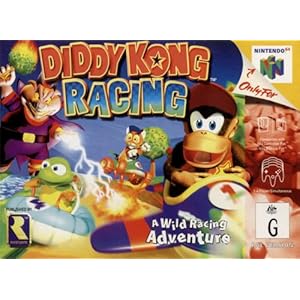
It's also interesting to note that this "new mechanic" isn't new:Diddy Kong Racing, originally released as an alternative (from Rare/Nintendo) take on Nintendo's Mario Kart series, added two main differentiating features: a large hub world, and three types of vehicles: Planes, Hovercrafts, Karts. Certain tracks allowed players to choose different vehicles, and these significant consequences to the race outcome: planes are forced up over the tunnels, and the tunnel, while longer, contains powerup items. Mario Kart 7 cleverly adopts a similar "choice and consequences" loop, allowing players to make those choices within the game on the fly.
While Mario Kart features iconic characters and frantic action, players will also undoubtably remember the various tracks that make each game memorable and unique. Ask any fan of Mario Kart and instantly they can tell you which tracks stands out from each iteration of the game. For me: Royal Raceway (Mario Kart 64), Baby Park (Mario Kart Double Dash), Airship Fortress (Mario Kart DS)... For me right now, it's hard to pick a favourite from this new one: The new Rainbow Road Wuhu island tracks is an interesting concept, forgoing the 3 lap count for one giant sectioned race; the new Bowser's Castle and Wario's Galleon offers up plenty of multi-path choices and interesting turns. It might be early to say this, but Mario Kart 7 has probably the best track selection out of all Mario Kart games.

In addition, every game since Mario Kart 64 have included 16 "Retro Courses", fan favourite tracks from the games past. It's interesting to observe the choices and what get's picked. I once had a discussion with a friend on exactly why certain tracks were picked, and I had a fun time researching this. Initially we both quite disappointed that Luigi's Mansion was included again; it turns out this is it's second appearance. I guess we've played Mario Kart DS too much.
  • Every batch of Retro courses will contain 4 original tracks from the two most recent Mario Kart releases (in this case, 4 from Mario Kart Wii, 4 from Mario Kart DS)
  • The retro course has not appeared as a Retro course before (with the exception of Mario Kart Super Circuit, which included all tracks from Super Mario Kart)

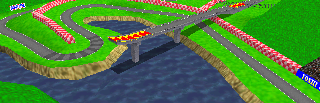
With these rules in mind, I was somewhat disappointed at the choices picked, the most notable with the absence tracks like Royal Raceway and Tick Tock Clock (both pictured above), as they both contain elements that can easily be used with the new hang-gliding mechanic, which leads me to my final thought....


When considering what tracks were to be included in Retro Course, there was probably a lot of design decisions in contrast to previous iterations. In Mario Kart 7, Retro courses had to be retrofitted to take advantage of the new features (and old unusable ones were removed). Elements like the stunt jumps in Mario Kart Wii, notably in Koopa Cape and Maple Treeway, were removed, making the 180 degree hairpin much more interesting. Older tracks tracks added additional ramps and jumps, allowing for additional hang-gliding sections (the biggest impact can be found in the older tracks like Kalimari Desert, taunting players to risk going off-road for the possible shortcut).

In fact, it can be observed that there were more tracks that were "suspended in mid-air" than on ground, which makes the omission of tracks like Tick tock Clock and Royal Raceway even more obvious when you think about it. Tracks like Airship Fortress and Waluigi Pinball only featured a forced jump section where players have no control over the glide time, robbing players of the new experience that they were promised.


Well, that's all I have for now. I guess I may do a full grind review in the future if I ever get three stars on 150cc.

Monday, May 23, 2011

Quick Impressions: LA Noire (PS3)

LA Noire has been a long time coming. First announced around 2007 as a PS3 exclusive title, this groundbreaking game has very little in common with most games from Rockstar or popular blockbuster titles. Thematically and gameplay-wise, LA Noire has much more in common with a cult favourite, Capcom's Ace Attorney series. With it's impressive facial motion capture tech and Rockstar's track record, how does the game stand up?

Spoiler alert - As a detective mystery game, there might be some spoilers. I've only covered the first few cases. However, I'll also touch briefly on Phoenix Wright, Heavy Rain and GTA4 (not in major spoiler sense, but you should be aware of these games and what they're about.


One of the big features of LA Noire has been their motion capturing technology, and it only partially succeed. True to their claim, facial expressions are absolutely fantastic, capturing every minuet detail. However, the game also suffers because of this feature: Other animations such as body movements don't match up to facial expressions, often leaving a feeling of heads pasted on body effect; hair doesn't animate (which is probably why everyone wears hats); camera angle and focus isn't done in a way to suggest depth, often leaving the game feel like it's green-screened badly; texture details on faces also feel lacking, giving all characters a "cel-shaded" look that doesn't quite feel right. The game occasionally jumps across the uncanny valley, especially with concentrated close up shots of character faces, but more often than not, scenes falls back into a creepy, weird, animatronic feel. LA Noire is probably the best attempt yet, and while it falls short, you have to feel impressed by the tech. (Yes, there are drawbacks, but I guess that's not that important, especially in this game)

Perhaps more interesting with LA Noire's game design is it's take on gameplay. Let's start with the con: Team Bondi and Rockstar probably knew that no matter how they try, there will be fans of games like GTA and Red Dead that will come over and expect another open world romp, so it wasn't a surprise to see that the open world in LA Noire, nor was it a surprise to see the side missions feel directly lifted from a GTA game. However, the open world feels somewhat tacked on and pointless, and more importantly, the side missions has a "been there, done that" feel. While the open world is huge, the fact that you're playing a cop immediately translates to a minimal sandbox experience: any negative interactions with the world, and you're immediately punished; even thought this is realistic, it's not necessary the same type of fun people would have expected in an open world. The side missions, on the other hand, suffers from the clunky controls (running and shooting is mapped to the same button? MADNESS) that gets the job done most of the time. While it's merely competent, I was often asking myself, "why aren't I playing GTA instead if I wanted this gameplay?"

However, the investigative/detective part of LA Noire makes up for all it's shortcomings. While the puzzles and item searches will be instantly familiar to anyone who's played any Phoenix Wright or older adventure games, it's the interrogation that sets the game apart. Observing the witness/suspect's reaction, facial animation and tone of voice goes a long way in selling the drama (and a much better, more feasible way than Phoenix Wright's text based word hunt) The decisions and choices seems to be much more deliberate here too, unlike Heavy Rain, where you can possibly sit there and agonize for the right answer forever, flip flopping back and forth between two choices. You'll feel like you messed up because of reflex in Heavy Rain, you'll feel like an idiot who wasn't thinking when you mess up in LA Noire.

One interesting observation about the game though, is that on paper, there is no "fail". (I'm going to ignore the side missions where you die, or chase scenes where you mess upon). In this sense, this game plays very much like most adventure games, but even then most still have a failure condition once you mess up too many times. (In Phoenix Wright, raising the wrong objection too many times in a trial would be fail) In here, it seems that you can be the worse detective and still proceed in the story: the only meaningful result is your case score. Maybe in later chapters I won't get promoted, but that isn't the case just yet.

I'll probably check in later once I'm "done" with the game.

Tuesday, April 19, 2011

Quick Impressions: Portal 2 (PS3)

Note: If you are reading this and haven't played Portal 1. Stop. Go to a PC/Mac/PS3/360, get Portal, and play it. Do not return until you are done. Don't read on until you are familiar with Portal 1.

I am not responsible for spoiling Portal 1 for you from this point onwards.


When Portal first came out in 2007, it was one of those groundbreaking landmarks that caught everyone by surprise: A FPS where you avoid combat? Puzzle Solving? No Multiplayer? Portal was one of those games that, despite being unconventional and boxed in between two excellent titles, stood out as a jaw-droppingly memorable every step of the way.

Fast-forward to 2011. Portal 2, as a "full game", feels just as jaw dropping as the first game. While it loses some originality, it gains a healthy dose of even wittier writing, fantastic pacing, and a much more even learning curve. After finishing the game for the first time, I'm itching to get right back into it for both the Dev Commentary (Just started it and it's already fascinating), and the Co-op multiplayer (interesting that they added multiplayer, but from all accounts, seems like a natural fit, I'll try it later). In my mind, Portal 2 comes dangerously close to matching Dead Space 2 as the current front-runner for game of the year (and the similarities don't end there either).

One of the brilliant things that Dead Space 2 did was recalling player's past experience in the first game (I should write about Dead Space 2 too, that game has a lot of interesting talking points), Portal 2, interestingly, pulls a similar trick at the start of this game, taking the player for a ride through areas they have experienced in the first game. New players to the series should find the first few stages sufficient in teaching them the basics of Portal's gameplay; Veterans of the series will find the first few stages interesting too, as the new visuals tell a great story of the time between the first and the second game, and some minor tweaks to the early puzzles makes the experience even more memorable. I like to think that this technique of recalling previous games help players strengthen their experience and their connection to the game world: it's like seeing an old friend, trying to catch up to what happen, and see what's changed. In both Portal 2 and Dead Space 2, this "mechanic" was used to build anticipation and create surprises that a new player may not notice. While these sections may seem trivial and well designed to new players, they felt extra special to players who've seen the first. I've caught myself walking through different areas wondering what "twists" they will apply here.

The first Portal suffers from the same issues that typically plagues puzzle games: designers can try to iron out as many spikes in difficulty for a general audience, but all it takes is one stumbling block to throw a player off. While Portal 1 was fantastic, there were parts in the end game scenario that would have been potentially game breaking. To me, it seems like Portal 2 did a much better job of guiding the player to the key points they needed to see. Even though I was new to all the stages, I was able to pinpoint the exit, and the possible steps that I needed to take to reach the goal; the clever level design, layout, and organization made me feel smart about solving the problem (whether any intelligence was involved was debatable). One can say that some this new focus have made the game too streamlined (instead of a full wall, there's only a small section where you can put portals), but it really feels like there's been actual play session tests to make sure the game will feel challenging for players yet not to alienate people and discourage further play.

(As an offshoot, there's two specific points in the end game scenario where I was able to do things with lightening quick-reflex. I highly doubt it's voodoo magic, but there were enough psychological hints and telltale signs that motivated me to react properly on pure gut instinct. When you get there, you'll do it too, and we can talk afterwards.)

One of the key design elements mentioned in the first game's developer commentary was the "second act", where players walk through the "hidden underbelly" of the test chambers. While this was an enticing story arc, I've wondered how many players gave up on Portal before getting that far (some of the puzzles were brutal, requiring both reflex and mental capacity). I do think that Portal 2's story allowed much greater freedom for Valve to weave players through both "Real" tests and the "behind the scenes" sections. Fairly early on, players would be tossed between both the real and fake sections of the labs, giving a greater sense of decay in the environment, and the connection between what is real and what isn't. In the first game, you were essentially a lab rat until the world was revealed; here, you are shown right away that the labs, the tests, and the setting was part of something bigger. Every time a transition between the lab and the real world takes place, I would start looking around for other cracks within the facade, possible for things that give me a greater glimpse of the world. It's a beautiful done mechanic, and would-be designers should take note.

Perhaps the best part of Portal 2 for me was the writing. Portal's GLaDOS was fantastic, but here, both GLaDOS, Wheatly and the other characters are so well written that I often stop and wait to listen for more dialog. GLaDOS' snaky remarks, Wheatly's crazy incoherent banter and Cave Johnson's seemingly insane statements are delivered so pitch perfect, it brings life to the entire game (even though you are the only living person in the entire game). Without the dialog and chatter, Portal 2 would not be half the game it is right now.

Oh, and there's the ending, but let's not talk about that. It's absolutely Lunacy!

I've probably written way too much for a "first impression", but I think the parts I mentioned seems important enough to write about. There's a lot of good design substance here that any designers or would-be designers should take a hard look at how things work and why people enjoy them when they work.